
Ceramic vs Stainless Steel Blades: Which Head Shaver Is Best for Sensitive Scalps?

Last summer in California, I met Mike, a long-time client at a men’s grooming shop. He always kept a clean-shaven head, but he walked in with a red, irritated scalp while holding a stainless steel–bladed Freebird Head Shaver. “Every shave feels like a sunburn—hot, itchy, and raw,” he said. “I’ve tried three different stainless steel blade shavers, and it’s always the same.”
I suggested he try a ceramic-bladed Voyager Head Shaver. Two weeks later, Mike returned and told me: “Now my scalp feels cool after shaving—no redness, no burning. Turns out it wasn’t my scalp that was too sensitive, I was just using the wrong blade material.”
Mike’s case is not unusual in the U.S. According to the Men’s Grooming Health Report, 42% of bald men experience scalp irritation after shaving, and 80% of them use stainless steel–blade head shavers. I’ve been there, too—when I used a stainless steel–bladed Braun Head Shaver, my scalp turned red even with soothing shave cream. The problem disappeared only after switching to a ceramic-bladed Remington Head Shaver.
With six years of experience researching grooming tools and analyzing over 1,000 Amazon head shaver reviews, I’ll break down the real differences between ceramic and stainless steel blades. We’ll look at their material properties, user feedback, and expert advice to help sensitive scalp users choose the best head shaver.
Sensitive Scalps and the Three Major Irritation Triggers
Sensitive scalps are about 40% thinner than normal skin and more vulnerable to friction, heat, and metal exposure. Unfortunately, stainless steel blades hit all three irritation triggers—especially problematic for men who shave frequently.
1. Friction: Stainless Steel Blades Dull and Pull
Stainless steel blades typically measure about HRC50 in hardness. After two to three weeks of use, their edges start curling microscopically, creating a saw-like edge. This causes pulling instead of cutting.
Amazon reviewer Jake shared: “By week three, my stainless steel shaver started tugging at hair. My scalp burned after every shave. When I opened it up, the blades looked like little saws.”
Under a microscope, worn stainless steel blades look jagged and scrape the scalp—like sandpaper against skin. Ceramic blades, by contrast, are made of zirconia with a hardness of HRC85 (1.7x harder). They hold sharpness for six to eight weeks and feature rounded, polished edges. Users often describe the feel as “like ice gliding across the scalp.”
2. Heat: Stainless Steel Transfers Motor Heat Directly
Motors and cutting heads can warm during use. Heat buildup varies with the motor, cutting material, pass length and cleaning condition. If the head feels hot, pause, inspect it and let it cool before continuing.
Ceramic blades, with only 1.5 W/(m·K) thermal conductivity, stayed at 28°C even after five minutes. Florida user Tom noted: “In summer, stainless steel blades felt like hot metal on my head. Switching to ceramic, the shave stayed cool the whole time.”
For users in warmer U.S. climates, ceramic blades can be a game changer.
3. Metal Exposure: Stainless Steel Can Rust and Trigger Allergies
Sweat and oils break down lower-grade stainless steel (such as 304), leading to rust. Rust releases nickel and iron ions, both common allergens. Dermatologist Dr. Lisa, in the Men’s Scalp Health Guide, explains: “Nickel is one of the leading causes of contact dermatitis—up to 15% of sensitive skin patients react to it.”
Ceramic blades are chemically inert. They don’t rust, corrode, or release metal ions. New York user David shared: “My stainless steel shaver caused rashes diagnosed as contact dermatitis. Switching to a ceramic Voyager Head Shaver cleared them up within two weeks. Six months later, the blades are still clean and rust-free.”
Side-by-Side Comparison: Ceramic vs Stainless Steel Head Shaver Blades
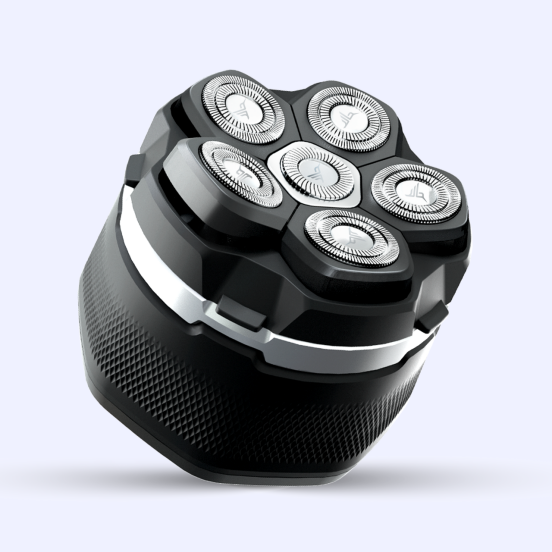
| Factor | Ceramic Blades (Zirconia) | Stainless Steel Blades (304 & below) | Verdict for Sensitive Scalps |
| Friction | Smooth, rounded edges, no pulling | Dull after 2–3 weeks, pulls hair | ✅ Ceramic wins |
| Heat Transfer | Low (1.5 W/m·K), stays cool | High (15 W/m·K), heats scalp quickly | ✅ Ceramic wins |
| Corrosion | No rust, no metal ions | Prone to rust, releases nickel/iron | ✅ Ceramic wins |
| Sharpness | Stays sharp 6–8 weeks | Dulls in 2–3 weeks | ✅ Ceramic wins |
| Cleaning | Hydrophobic, easy rinse | Hair buildup, harder to clean | ✅ Ceramic wins |
How to Choose the Right Head Shaver for Sensitive Skin
The U.S. market is crowded with head shavers, and many brands use misleading labels like “ceramic coated” instead of “full ceramic.” Here’s a three-step process to avoid the traps:
Step 1: Check Blade Material
Look for “Full Zirconia Ceramic Blades.” Avoid “Ceramic Coated” models—the coating wears off, exposing stainless steel underneath.
Step 2: Look for Protective Features
3D floating heads adapt to scalp curves, reducing pressure and friction.
Silicone heat guards prevent residual heat transfer—especially useful in hot southern states.
Step 3: Read Verified Reviews
Search with “sensitive skin” on Amazon. Models like the Voyager Head Shaver consistently earn over 90% positive feedback from sensitive skin users.
Real-World Results: Three Sensitive Scalp Users
Mike (California, oily sensitive scalp, daily shaver)
Before: Freebird Head Shaver (stainless steel) → redness & burning every shave
After: Voyager Head Shaver (ceramic) → cool, irritation-free shaves, blades stayed sharp for 5 weeks
Tom (Florida, mixed sensitive scalp, shaves every other day)
Before: Braun Head Shaver (stainless steel) → tugging, scalp pain, odor issues
After: Remington Head Shaver (ceramic) → smooth, more comfortable shaves, easy rinse cleaning
David (New York, dry sensitive scalp, shaves 3x per week)
Before: Low-cost Walmart Head Shaver (stainless steel) → rust, rashes diagnosed as dermatitis
After: Voyager Head Shaver (ceramic) → rash-free within 2 weeks, blades rust-free after 6 months
Myths and Misconceptions
“Stainless steel is tougher—better for clumsy users.”
Ceramic is more brittle, but with a protective case (like Voyager’s travel box), breakage isn’t an issue. In fact, ceramic lasts longer between replacements.
“Ceramic blades cost too much.”
While ceramic head shavers are about 30–40% pricier upfront, they stay sharper longer and require fewer replacements. Over six months, users actually save money.
Final Takeaway
For men in the U.S. with sensitive scalps, choosing the right head shaver isn’t just about a close shave—it’s about avoiding irritation and maintaining scalp health.
Ceramic blades are:
Smoother and sharper for longer
Cooler on the skin
Rust-free and skin-contact material details
If you’ve struggled with irritation from stainless steel blades, consider switching to a ceramic-blade Voyager Head Shaver or Remington Head Shaver. Search “ceramic head shaver for sensitive skin” on Amazon and filter for models with over 90% sensitive skin approval ratings.
The real best head shaver is one that shaves clean and feels gentle—letting you enjoy the freedom of a bald look without the pain.