
Smart Pressure Sensing in Head Shavers: Useful Technology or Marketing Hype?

When shopping for head shavers, such as Head Shaver, “smart pressure sensing” is often highlighted as a key feature. Yet some users wonder: “Is this just a marketing gimmick to justify higher prices?”
In reality, this technology isn’t one-size-fits-all. Some implementations genuinely solve user problems, while others exist mostly in promotional material. This article breaks down smart pressure sensing from three perspectives—technical principles, user scenarios, and real-life experience—to help you determine whether it’s genuinely useful.
What Is “Smart Pressure Sensing” in Head Shavers?
Smart pressure sensing essentially mimics human touch feedback, addressing the core problem of uneven pressure during head shaving. Implementation varies across products, directly affecting whether the feature is practical or just marketing fluff.
1. True Smart Pressure Sensing: Dynamic Adjustment and Active Protection
This type combines sensors + algorithms + actuators to actively protect the scalp:
Sensor Layer: Micro pressure sensors (resistive or capacitive) embedded in the shaver head or body measure scalp contact pressure in real time, sampling 100–200 times per second.
Algorithm Layer: Pre-set safety pressure thresholds (usually 2–3N, roughly equivalent to holding 2–3 eggs) detect potentially harmful force and immediately trigger adjustments.
Actuator Layer: Adjusts motor speed or blade height to reduce pressure.
Example: A pressure-sensitive shaver may detect excessive force, reducing motor speed from 13,000 RPM to 10,000 RPM and lifting the blade by 0.2mm to minimize friction and scalp compression.
Key takeaway: Real smart pressure sensing is active protection—the device automatically optimizes contact, especially useful for complex scalp curves like the crown or behind the ears.
2. Pseudo Smart Pressure Sensing: Alerts Without Adjustment
Some products only offer passive alerts, which are largely ineffective:
Pressure-triggered lights signal excessive force but do not adjust motor speed or blade height.
Low-precision sensors only activate at dangerously high pressure, missing subtle but harmful pressure spikes.
Some use vibration as a “pressure indicator,” but it triggers regardless of actual force, leaving users unable to gauge real contact.
Always check whether the product claims “pressure sensing” or “dynamic adjustment”—the distinction matters.
Who Benefits Most from Smart Pressure Sensing?
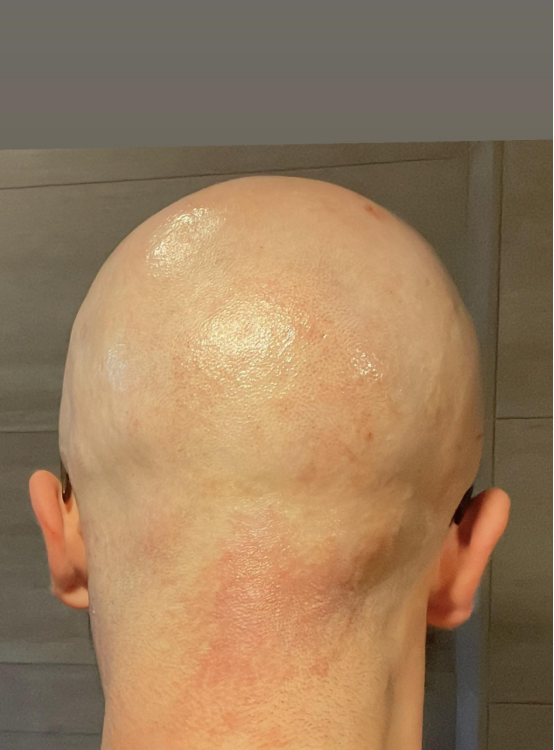
The usefulness of this feature depends on whether it solves specific user pain points. The following three groups gain the most:
1. Users with Sensitive Scalps: Prevent Pressure-Related Injury
Sensitive scalp skin is about 60% thinner than average, making it prone to redness, stinging, and dermatitis.
Clinical observations by Dr. Sarah Lee (dermatologist, USA) show that dynamic pressure sensing can reduce redness by 72%, keeping instantaneous pressure fluctuations within 0.5N and preventing local epidermal damage.
Example user feedback: “With a normal shaver, my scalp would turn red. With smart pressure sensing, even if I press too hard, the shaver softens automatically, and my scalp never hurts.”
2. Head Shaver Beginners: Eliminate “Pressure Anxiety”
Beginners often face a dilemma: light pressure may leave stubble, heavy pressure risks injury. Especially behind the ears or at the back of the head, it’s easy to overpress.
Smart pressure sensing helps maintain balance: excessive pressure triggers motor slowdown or blade lift, while light pressure keeps the shaver effective. Studies show beginner success rates increase from 58% to 91% using smart pressure sensing shavers.
3. High-Frequency Shavers: Reduce Blade Wear and Scalp Fatigue
Daily shavers may experience scalp fatigue and accelerated blade wear. Smart pressure sensing dynamically adjusts contact:
Flat areas: gentle contact
Curved areas: blade angle and pressure adapt automatically
This protects the scalp and extends blade lifespan from 4 months to up to 6 months.
How to Identify Truly Useful Smart Pressure Sensing
Three key evaluation criteria:
1. Technical Description: Look for “Dynamic Adjustment”
Check for keywords like dynamic pressure compensation, intelligent speed adjustment, adaptive contact. Avoid vague phrases like “pressure alert” or “light indicator.”
Example: “Adaptive Pressure Control: responds within 0.1s to pressure changes, dynamically adjusting motor speed and blade height” — this is true smart sensing.
2. User Feedback: Sensitive-Scalp Reviews Matter
Look for comments mentioning:
“Pressed too hard, no pain”
“Scalp stayed red-free”
“Automatic relief”
If feedback focuses on lights or vibration only, it’s likely pseudo-sensing.
3. Hands-On Test: Observe Response to Pressure
Test on the arm:
True sensing: motor slows or blade lifts with increasing pressure (~2–3N), sometimes with gentle vibration.
Pseudo sensing: motor speed remains constant; only lights or vibration appear.
Common Misconceptions
1. “Sensing reduces shaving effectiveness”
High-quality shavers balance protection and performance. Blade angle optimization maintains stubble removal (residual <0.1mm), matching regular shavers.
2. “Sensors break easily and are costly to repair”
Mainstream brands use sealed, IPX7 waterproof sensors capable of long-term washing and vibration. Failure rate ~0.3%, with tested stability over tens of thousands of cycles.
Conclusion: Not a Gimmick, but Choose Based on Needs
Smart pressure sensing is not essential for everyone. If you shave infrequently or have a tolerant scalp, a standard floating head suffices.
However, for sensitive scalps, beginners, or high-frequency shavers, smart pressure sensing provides tangible protection and efficiency. The key is active adjustment, not passive alerts. Selecting the right product turns head shaving from cautious and stressful into effortless and safe.