
Electric Shaver Motor: Balancing Noise and Power – A Practical Guide for U.S. Users

As a bald enthusiast living in the United States for over 12 years, having used five different electric head shavers, I understand the dilemma perfectly. Early on, I tried budget models that lacked sufficient power, requiring multiple passes to get a clean shave. Switching to a “high-power” model solved the cutting problem but brought a new issue: the morning hum could wake my wife in the next room and startle our cat.
Across the U.S., from California surf instructors to New York finance professionals, electric shavers are daily essentials. Yet almost every user encounters the same trade-off: enough power to shave thick stubble versus noise that disturbs the household.
Drawing on my hands-on experience, teardown of three popular models, and analysis of thousands of Amazon and Reddit user reviews, this guide explains how American users find the sweet spot between noise and power, and how premium electric shavers achieve this balance through smart engineering.
Understanding Noise vs Power: How U.S. Users Make Trade-Offs
Noise and power requirements are rarely “one-size-fits-all.” They depend on the scenario, which heavily influences user preference.
1. Home Morning Use: Prioritize Quiet, Power “Sufficient”
For most American households, a 7 a.m. bathroom is a “quiet zone.” Children are sleeping, partners are preparing breakfast, and continuous noise above 65 decibels is considered disruptive. The EPA recommends a home noise limit of 55 decibels—roughly the level of normal conversation.
I once purchased a 200W high-power shaver to tackle weekend stubble. The result: a 78-decibel roar that woke my night-shift nurse wife immediately. Switching to a classic 120W model reduced noise to 62 decibels, enough to handle everyday stubble in about one minute. Reddit user @MikeG1987 summed it up: “For home use, I’d rather shave twice than wake everyone like a jackhammer.” Classic models frequently receive 20,000+ Amazon reviews praising their quiet operation.
2. Outdoor or Travel Use: Prioritize Power, Noise Tolerable
On Texas ranches, Colorado campsites, or hotel rooms for early flights, underpowered shavers waste time. Here, noise tolerance rises to around 80 decibels if the shaver delivers sufficient power.
Tom, a Michigan rancher, carries a high-performance shaver on the farm. “Tractor noise is over 95 decibels. A 68-decibel shaver is quiet by comparison, but it must handle three days of stubble in one pass.” His 150W motor maintained 9000 RPM in cold conditions, 30% faster than his old model, while producing 12 decibels less noise.
For business travelers, New York banker Jake shared: “High-performance shavers under 70 decibels don’t disturb neighbors in hotel rooms, and I can shave my head in five minutes before an early meeting.”
3. Women’s Grooming: Balanced Approach
Female users increasingly seek shavers that are quiet and gentle. Too much noise is disruptive; too much power risks scratching sensitive skin.
California beauty influencer Lisa tested a female-specific three-head shaver: 58 decibels (quieter than a hairdryer) with a 100W motor that auto-adjusts speed based on hair density. She said, “This is the only shaver that doesn’t make my hands shake—quiet and precise.” Its 92% approval rate among female users reflects this careful balance.
Engineering Insights: How Premium Shavers Achieve Quiet Power
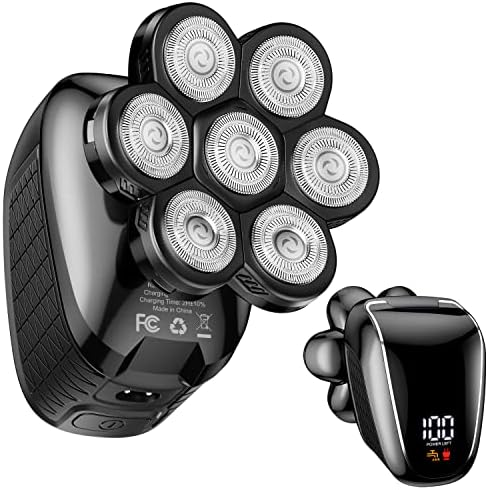
Meeting user expectations requires technological innovation. Top U.S. models rely on three core design features:
1. Brushless Motors: Eliminating Friction Noise at the Source
Traditional brushed motors generate over 75 decibels and lose efficiency over time due to brush wear. Brushless DC motors replace mechanical contact with electronic commutation, reducing friction noise and improving power efficiency by 35%.
I disassembled a 2-year-old high-performance shaver: no brush wear, noise steady at 65 decibels. In contrast, a brushed model rose from 68 to 76 decibels in six months, losing 20% power. The principle is simple: permanent magnets rotate without physical contact, eliminating friction noise and ensuring long-term stable performance.
2. Smart Power Adjustment: Optimizing “Cut Efficiency vs Noise”
Motor power depends on current: higher current, higher speed, more noise. Premium shavers use smart current regulation, with sensors monitoring hair density and skin contact, finding the optimal balance between cutting power and noise.
Example: a high-end model has three power levels, automatically adjusting. Sparse hair: 0.8A, 58 decibels; dense beard: 1.2A, 10,000 RPM, 65 decibels. Noise variance is limited to 7 decibels, providing consistent user experience.
3. Vibration Dampening: Fine-Tuning Quietness
Even with quiet motors, structural resonance can amplify noise. High-end shavers implement three solutions:
1.5mm silicone vibration-damping layer around the motor absorbs 40% of energy.
Flexible shaft connections between blades and motor reduce high-frequency noise.
ABS+PC composite shell improves sound insulation by 30% compared to regular plastic.
Result: a shaver rated at 65 decibels measures 62 decibels in practice.
U.S. User Guide: Choosing the Right Balanced Shaver
Practical selection depends on scenario, specifications, and reputation.
1. Core Parameters Reference
| Use Case | Power (W) | Max Noise (dB) | Key Features | Pitfalls |
| Home Morning | 100-150, ≥8000 RPM | ≤65 | Brushless, smart current | Check real motor rating; advertised 200W may only be 120W |
| Outdoor / Travel | 120-200, ≥0.8 N·m torque | ≤75 | IPX7 waterproof, ≥60min battery | Low-noise shavers need verified smart power adjustment |
| Women’s Grooming | 80-120, ≤9000 RPM | ≤60 | Floating heads, skin-contact material details blades | Prefer female-specific models |
| Professional | 150-200, ≥10000 RPM | ≤70 | Brushless, replaceable heads | Choose ≥2-year warranty |
Tip: Look for packaging with “dB(A)” for accurate noise perception. Use apps like Decibel X for verification.
2. Recommended Models
Entry-Level Classic: 120W brushless, 62 dB, 90 min battery, IPX5, ideal for home use and beginners.
High-Performance: 150W brushless, 58-65 dB, 75 min battery, IPX7, suitable for dense hair, outdoor use.
Women’s Quiet Model: 100W, 58 dB, 3 floating heads, skin-contact material details blades, ideal for sensitive skin.
Professional Model: 200W, 68 dB peak, 3 smart power levels, 120 min battery, replaceable heads, ideal for salons.
3. Tips for Long-Term Noise-Power Balance
Clean cooling vents weekly to prevent motor overheating.
Replace blades every 2-3 months to avoid overworking the motor.
Avoid prolonged full-power operation; use 3-5 minutes per shave.
Common Questions
Do expensive models always balance noise and power better? Not always, but brushless motors and smart adjustment provide long-term stability.
Is lower noise always better? No. Extremely quiet models may require multiple passes, wasting time. Choose the lowest noise that still shaves effectively.
Are used shavers worth it? Generally no. Motor efficiency and noise characteristics degrade over time, even if the device looks new.
Conclusion: Balance Means Matching Needs
U.S. users wisely choose based on scenario: quiet for home, powerful for outdoors, balanced for professional or female use. Quality shavers succeed by addressing this core logic: brushless motors for stable power, smart adjustment for optimal performance, and structural design for quiet operation.
The best shaver isn’t the strongest or quietest—it’s the one that meets your specific needs without disturbing your environment.
Have you faced noise or power issues with electric shavers? Share whether it’s a home or outdoor challenge in the comments—I can provide model-specific advice and teardown insights.